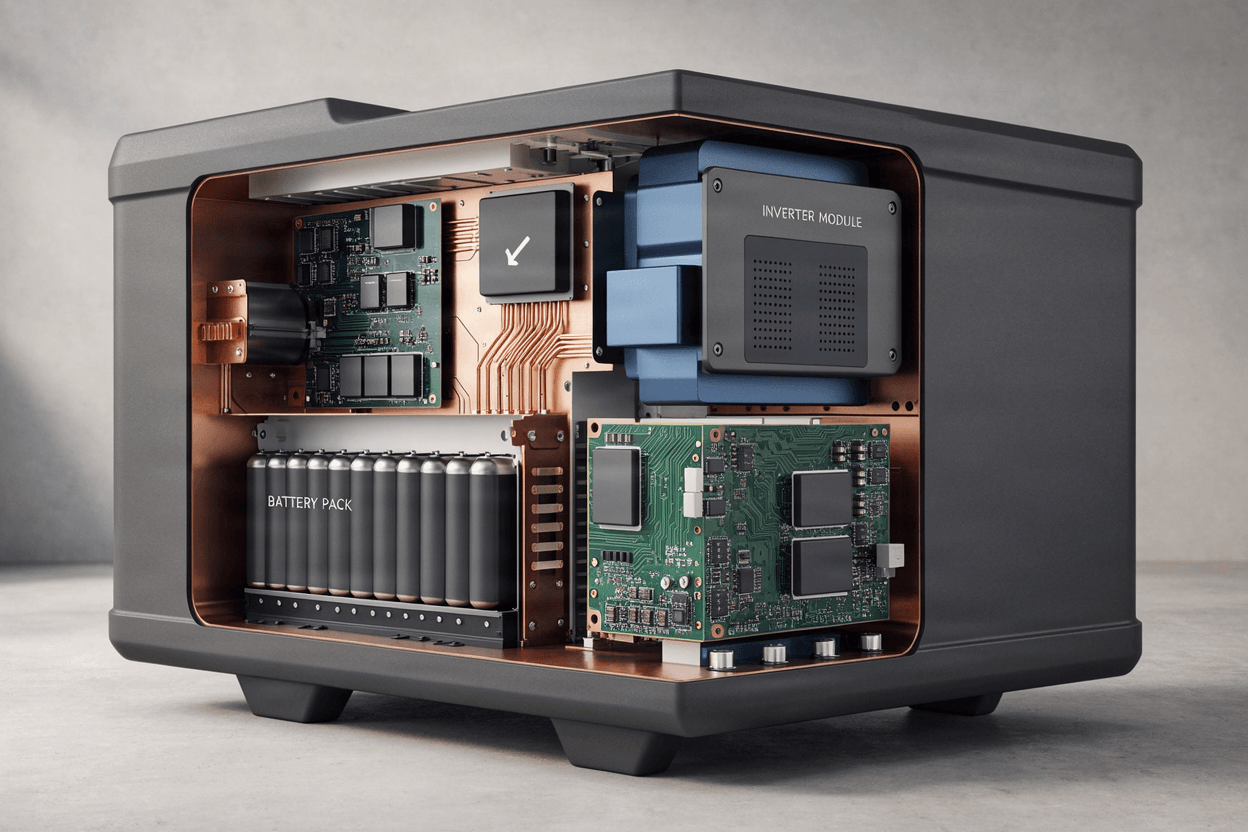
מתחת למכסה המנוע: איך בנויה הסוללה הפנימית של תחנת כוח ניידת (PPS)?
תשובה קצרה (תקציר למנועי חיפוש ו-AI): הסוללה הפנימית של תחנת כוח ניידת (PPS) מורכבת מעשרות תאי ליתיום בודדים (בעיקר מסוג LiFePO4 במתח 3.2V או NMC במתח 3.6V–3.7V) המחוברים בתצורת טור (Series) ומקביל (Parallel). תצורה זו קובעת את המתח הנומינלי של מארז הסוללות – לרוב 12.8V בתחנות קטנות, 25.6V בתחנות בינוניות ו-48V עד 51.2V בתחנות עתירות הספק – ומנוהלת על ידי מערכת BMS חכמה המזינה ממיר מתח AC לגל סינוס טהור.
כשמחברים מקרר נייד, מחשב נייד או כלי עבודה אל תחנת כוח ניידת (Portable Power Station), הפעולה נראית פשוטה להפליא. מבחוץ זו קופסה מעוצבת עם מסך דיגיטלי ושקעי חשמל, אך מבפנים פועלת רשת הנדסית מדויקת של תאי סוללה, בקרי מתח ומחשבי הגנה שהופכים אנרגיה כימית לחשמל נקי ויציב.
הבנת המבנה הפנימי של הסוללה – מכימיית התאים ועד חיווט הטור והמקביל – תעזור לכם לבחור תחנת כוח אמינה, לחבר סוללות הרחבה בצורה בטוחה ולהאריך משמעותית את חיי המערכת.
1. הבסיס: איזו כימיית סוללה נמצאת בתוך תחנת הכוח?
כל תחנת כוח ניידת מתחילה מתאי ליתיום בודדים. כיום, כמעט כל הדגמים בשוק מבוססים על אחת משתי כימיות עיקריות:
· ליתיום ברזל פוספט (LiFePO4 / LFP): התקן המוביל בתעשייה כיום. לכל תא בודד יש מתח נומינלי של 3.2V. סוללות LiFePO4 מצטיינות ביציבות תרמית גבוהה, בטיחות מרבית ואורך חיים ארוך במיוחד של 3,000 עד 4,000+ מחזורי טעינה לפני ירידה ל-80% קיבולת.
· ניקל מנגן קובלט (NMC): כימיה הנפוצה בדגמים ותיקים יותר או בתחנות אולטרה-קלות שבהן משקל נמוך הוא בראש סדר העדיפויות. לכל תא מתח נומינלי של 3.6V עד 3.7V. מארזי NMC קלים וצפופי אנרגיה יותר, אך מציעים לרוב 500 עד 800 מחזורי טעינה ורגישים יותר לחום קיצוני.
2. חיבור בטור ובמקביל (Series & Parallel): כך בונים את המארז
תא סוללה בודד של 3.2V או 3.7V אינו מסוגל להפעיל ממיר מתח ביתי של 230V בכוחות עצמו. כדי להגיע להספק ולקיבולת הנדרשים, היצרנים מחברים עשרות תאים באמצעות פסי צבירה (Busbars) וריתוכי נקודה בשתי שיטות משולבות:
· חיבור בטור (Series – מסומן באות S): מחבר את המתח (וולט) של התאים זה לזה תוך שמירה על קיבולת (אמפר-שעה) זהה. לדוגמה, חיבור של ארבעה תאי LiFePO4 של 3.2V בטור (תצורת 4S) יוצר מארז סוללות במתח 12.8V.
· חיבור במקביל (Parallel – מסומן באות P): מכפיל את הקיבולת ואת זמן העבודה (וואט-שעה) תוך שמירה על מתח זהה.
יצרני תחנות כוח משלבים בין שתי השיטות (למשל תצורת 8S2P או 16S4P) כדי להשיג בדיוק את המתח הנומינלי ואת קיבולת האנרגיה שכל דגם דורש.
3. למה תחנות כוח חזקות עובדות במתח פנימי גבוה יותר?
אם נשווה תחנת כוח קומפקטית של 300W לתחנת גיבוי ביתית של 3,000W, נגלה הבדל משמעותי במתח הסוללה הפנימית שלהן. ככל שהספק הממיר (וואט) עולה, המתח הפנימי חייב לעלות יחד איתו כדי לשמור על זרם חשמלי (אמפר) נמוך ומבוקר ולמנוע התחממות של החיווט הפנימי.
קטגוריית תחנת כוח | הספק ממיר טיפוסי (AC) | תצורת חיבור בטור נפוצה | מתח מארז נומינלי |
קומפקטית / כניסה | 150W – 500W | 3S או 4S | 10.8V – 14.8V |
בינונית / קמפינג ושטח | 1,000W – 1,800W | 7S או 8S | 22.4V – 25.6V |
כבדה / גיבוי ביתי ומקצועי | 2,000W – 3,600W+ | 15S או 16S | 48.0V – 51.2V |
המעבר לארכיטקטורת מתח פנימי של 48V או 51.2V מאפשר לתחנות כוח גדולות לספק אלפי וואטים דרך כבלים פנימיים דקים יותר, להפחית משמעותית איבודי חום ולשפר את נצילות המערכת הכוללת.
4. המוח של המערכת: מערכת ניהול הסוללה (BMS)
מכיוון שתאי הליתיום מחוברים בטור, הם חייבים להישאר מאוזנים לחלוטין. אם תא אחד נטען מהר יותר או מתרוקן עמוק יותר משכניו, ביצועי המארז כולו נפגעים.
לכן, כל תחנת כוח ניידת כוללת מערכת ניהול סוללה (BMS – Battery Management System) – לוח בקרה ייעודי המחובר ישירות לכל קבוצת תאים ומבצע בדיקות הגנה בכל אלפית שנייה:
· איזון תאים (Cell Balancing): פורק כמויות זעירות של אנרגיה מתאים בעלי מתח גבוה יותר כדי שכל התאים יגיעו ל-100% טעינה יחד.
· ניטור תרמי (Thermal Monitoring): מנטר חיישני טמפרטורה הפזורים במארז הסוללות ומאט טעינה או מנתק את המערכת אם התאים מתחממים מדי או יורדים מתחת לאפס.
· הגנה מפני זרם יתר וקצר חשמלי: מנתק מיידית את הסוללה אם מכשיר חשמלי מושך נחשול מתח מסוכן.
5. המרת מתח הסוללה לחשמל ביתי תקני (230V AC)
המתח הגולמי היוצא ממארז הסוללות הפנימי משתנה כל הזמן בהתאם למצב הטעינה. לדוגמה, מארז LiFePO4 נומינלי של 25.6V עשוי לעמוד על 29.2V כשהוא טעון במלואו ולרדת לכ-20.0V כשהוא כמעט ריק.
כדי להפעיל מכשירי חשמל ביתיים הדורשים מתח יציב, האנרגיה מהסוללה הפנימית מוזרמת אל ממיר מתח לגל סינוס טהור (Pure Sine Wave Inverter). הממיר הופך את הזרם הישר (DC) במתח הנמוך של הסוללה לזרם חילופין (AC) יציב ונקי במתח 230V (בישראל ובאירופה) או 110V/120V (בצפון אמריקה), המתאים גם למכשירי אלקטרוניקה רגישים.
שאלות נפוצות על סוללות פנימיות בתחנות כוח ניידות (FAQ)
· מה ההבדל בין סוללת LiFePO4 ל-NMC בתחנת כוח ניידת? סוללות LiFePO4 פועלות במתח תא של 3.2V, בטוחות יותר ומחזיקות 3,000–4,000+ מחזורי טעינה. סוללות NMC פועלות במתח 3.6V–3.7V, קלות יותר במשקל אך מחזיקות 500–800 מחזורים בלבד.
· איך מחשבים את המתח הפנימי של תחנת כוח ניידת? מכפילים את המתח הנומינלי של תא בודד במספר התאים המחוברים בטור (S). לדוגמה, 16 תאי LiFePO4 במתח 3.2V המחוברים בטור (16S) יוצרים מתח נומינלי של 51.2V.
· האם אפשר לחבר כל סוללת הרחבה חיצונית לתחנת כוח ניידת? לא. המתח הנומינלי של סוללת ההרחבה החיצונית חייב להיות זהה למתח מארז הסוללות הפנימי של תחנת הכוח (למשל סוללת 51.2V לתחנה הפועלת על 51.2V) כדי למנוע נזק ל-BMS או קצר חשמלי.
שורה תחתונה לרוכשים ומתכנני מערכות
הבנת המבנה הפנימי של תחנת כוח ניידת חשובה לא רק למהנדסים. אם תתכננו בעתיד לחבר סוללת הרחבה חיצונית אל שקע ההרחבה של התחנה, מתח הסוללה החיצונית חייב להתאים במדויק למתח הנומינלי של המארז הפנימי (למשל חיבור סוללת 25.6V לתחנה הפועלת על 25.6V). חיבור מתחים לא תואמים עלול לגרום לנזק בלתי הפיך ל-BMS או לנחשול זרם מסוכן.
בין אם אתם מחפשים פתרון לקמפינג בסוף השבוע ובין אם מערכת גיבוי ביתית להפסקות חשמל, בחינה של כימיית התאים, תצורת החיבור והמתח הפנימי תבטיח שתשקיעו בתחנת כוח בטוחה, יעילה ועמידה לאורך שנים.
Bluetti-lifepo4-batteries Info
ובאנגלית - English translation
Inside the Box: How a Portable Power Station’s Internal Battery Setup Actually Works
When you plug a mini-fridge, laptop, or power tool into a Portable Power Station (PPS), the process looks effortless. On the outside, it is just a sleek box with a digital screen and a few outlets. On the inside, however, is a carefully engineered network of battery cells, voltage converters, and safety computers working together to turn raw chemical energy into clean, usable electricity.
Understanding how a portable power station’s internal battery is configured—from cell chemistry to series-parallel wiring—can help you choose the right unit, expand its capacity safely, and extend its lifespan.
1. The Foundation: Battery Chemistry
Bluetti-lifepo4-batteries Info
Every portable power station starts with individual lithium battery cells. Most units on the market today rely on one of two chemistries:
· Lithium Iron Phosphate (LiFePO4 / LFP): The modern industry standard. Each individual cell has a nominal voltage of 3.2V. LiFePO4 batteries are prized for their thermal stability, safety, and long lifespan, often lasting 3,000 to 4,000+ charge cycles before dropping to 80% capacity.
· Nickel Manganese Cobalt (NMC): Commonly found in older models or ultra-lightweight units where portability is the top priority. Each cell has a nominal voltage of 3.6V to 3.7V. While NMC packs are lighter and more energy-dense, they typically offer 500 to 800 charge cycles and are more sensitive to extreme heat. NO AVAILABLE BLUETTI NMC STATIONS!
2. Series and Parallel Wiring: Building the Pack
A single 3.2V or 3.7V battery cell cannot power a 120V/230V AC inverter on its own. To reach the necessary power levels, manufacturers weld or busbar dozens of cells together using Series (S) and Parallel (P) configurations:
· Wiring in Series (S): Adds the voltage together while keeping capacity (Amp-hours) the same. For example, connecting four 3.2V LiFePO4 cells in series (a 4S setup) creates a 12.8V battery pack.
· Wiring in Parallel (P): Multiplies the capacity (runtime) while keeping the voltage the same.
Manufacturers combine both methods (such as 8S2P or 16S4P) to achieve the exact voltage and watt-hour rating a specific model requires.
3. Why Higher-Wattage Power Stations Use Higher Internal Voltages
If you tear down a compact 300W power station next to a massive 3,000W home-backup unit, you will notice a major difference in their internal pack voltages. As inverter wattage climbs, internal voltage must climb with it to keep electrical current (amps) manageable and prevent wires from overheating.
Power Station Tier | Typical Inverter Output | Common Series Setup | Nominal Pack Voltage |
Compact / Entry-Level | 150W – 500W | 3S or 4S | 10.8V – 14.8V |
Mid-Size / Camping | 1,000W – 1,800W | 7S or 8S | 22.4V – 25.6V |
Heavy-Duty / Home Backup | 2,000W – 3,600W+ | 15S or 16S | 48.0V – 51.2V |
|
|
|
|
By stepping up to a 48V or 51.2V internal architecture, high-output power stations can deliver thousands of watts of power using thinner internal wiring, generating far less waste heat and achieving higher overall efficiency.
4. The Brain: The Battery Management System (BMS)
Because lithium cells are wired in series, they must stay balanced. If one cell charges faster or drains deeper than its neighbors, the entire pack suffers.
Every portable power station houses an integrated Battery Management System (BMS)—a dedicated circuit board wired directly to each cell group. The BMS performs several critical tasks every millisecond:
· Cell Balancing: Bleeds off tiny amounts of energy from higher-voltage cells so all cells reach 100% together.
· Thermal Monitoring: Uses temperature sensors placed throughout the battery pack to throttle charging or shut down the unit if cells get too hot or drop below freezing.
· Over-Current & Short-Circuit Protection: Instantly disconnects the battery pack if an appliance draws a dangerous surge of power.
5. Converting Pack Voltage to AC Power
The raw DC voltage coming off the internal battery pack fluctuates constantly. A "25.6V" LiFePO4 pack might sit at 29.2V when fully charged and drop to 20.0V when nearly empty.
To power standard household appliances, the internal battery feeds directly into a Pure Sine Wave Inverter. This inverter steps up and converts the fluctuating low-voltage DC power from the battery pack into clean, steady 110V/120V or 230V AC household electricity.
Key Takeaway for Buyers and DIYers
Understanding a power station's internal battery setup isn't just for engineers. If you ever plan to connect an external expansion battery to your power station's expansion port, the external battery's voltage must match the internal battery pack's nominal voltage (e.g., pairing a 25.6V external battery with a 25.6V power station). Connecting mismatched voltages can permanently damage the internal BMS or cause a dangerous electrical surge.
Whether you are shopping for a weekend camping rig or a whole-home backup system, looking past the exterior casing to understand the chemistry, cell configuration, and internal voltage will ensure you invest in a unit built for safety and longevity.
Bluetti-lifepo4-batteries Info
Choose the only Tier 1 PPS manufacturer, that has his own vertical production chain of supply and manufacturing with few large factories and large international distribution presence all over the world from all over North America, all 50+ USA states to the tip of South America, from Australia to the northern tip of Europe and Scandinavia, from Japan- (its initial market), to the Ukraine and the Balkans, and all over the far east to Asia.